
APPENDIX 10: Description of the actors observed at site over the seven day study period
BOURNEMOUTH UNIVERSITY
SCHOOL OF CONSERVATION SCIENCES
AN ASSESSMENT OF AVIAN AND OTHER SCAVENGING OF AN ANIMAL CARCASS AT KATERNIAGHAT WILDLIFE SANCTUARY, DISTRICT BAHRAICH, UTTAR PRADESH – INDIA, AND ITS FORENSIC IMPLICATIONS.
A DISSERTATION SUBMITTED AS PART OF THE REQUIREMENT FOR THE DEGREE OF MASTER OF SCIENCE IN
FORENSIC ARCHAEOLOGY: CRIME SCENE AND INTERNATIONAL INVESTIGATIONS
By
SHAMSHAD (ROMA) KHAN
FEBRUARY 2006
| APPENDIX 10: Description of the actors observed at site over the seven day study period |
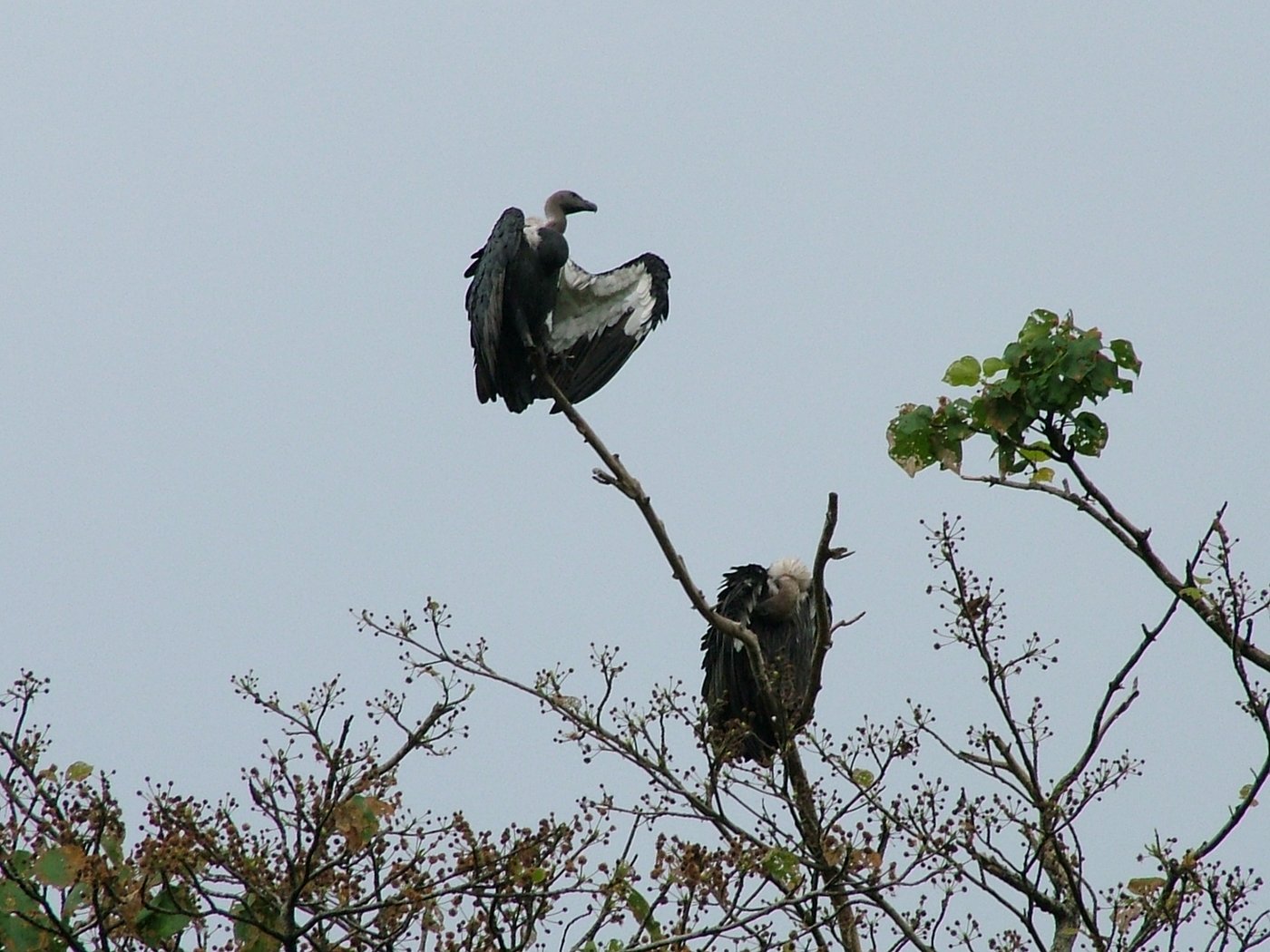
White-backed vulture is approximately 0.76 – 0.93 meters in height and a wingspan of 2.05 – 2.20 meters with blunt talons and bare head that characterize this group of carrion-feeding birds. The wings are black and under wings are white. The bare head and neck are black and the bill is silver in colour.
They inhabit in open country areas, near villages, towns, and cities, as well as parks and sanctuaries, in lowlands and Himalayan foothills up to 1,500 meters. Often closely associated with humans, large numbers congregated in and around towns, especially by rubbish dumps and slaughterhouses. They are found in Africa, southern Europe, Middle East, Afghanistan, India, Russia, Thailand, China and Nepal.
They are exclusively carrion feeders. Carrion located by means of keen eyesight and following other avian scavengers. They tend to gorge themselves, and then rest for a long period nearby while food is digested. The breeding season is October through April/May.
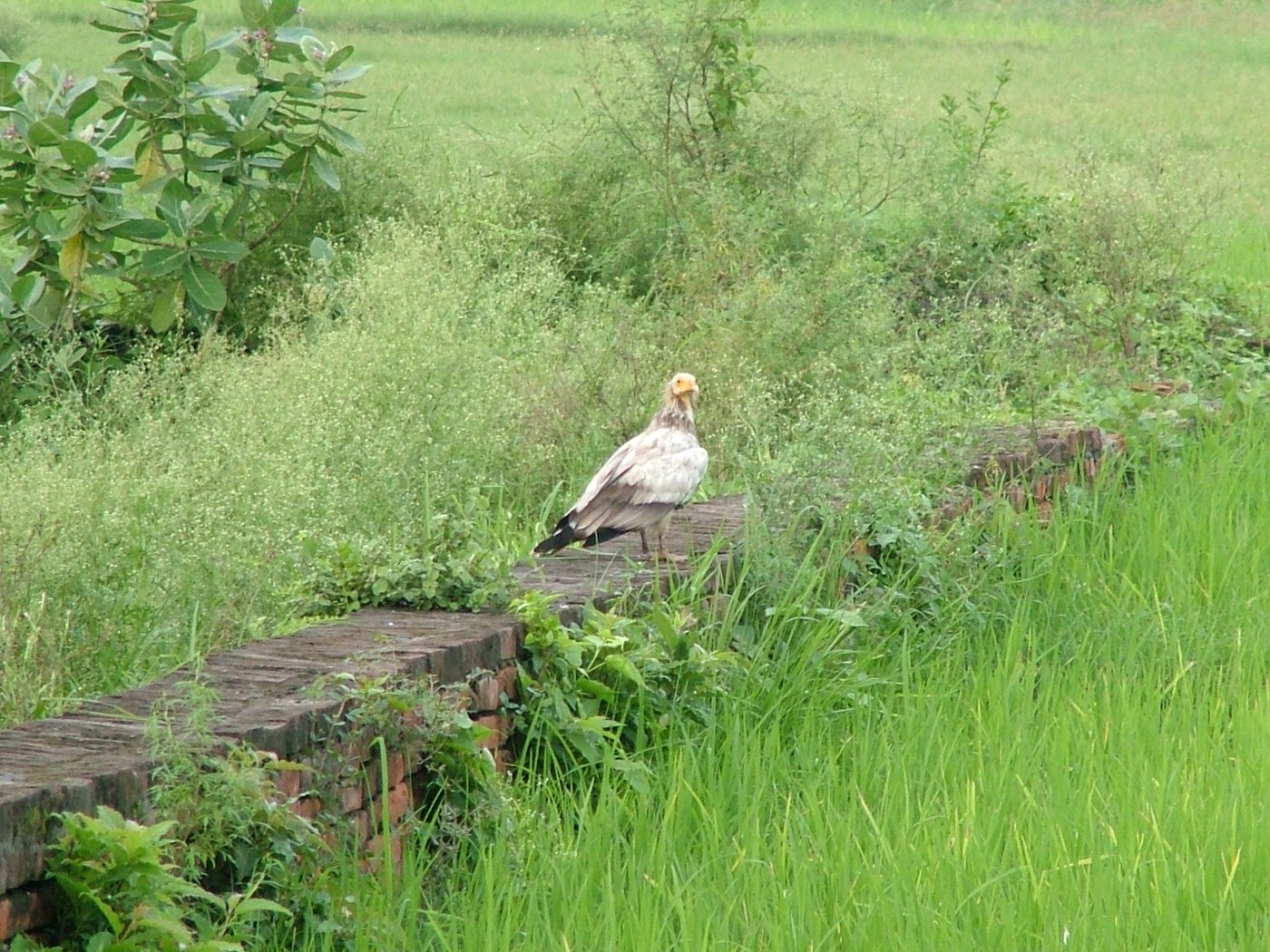
Egyptian Vulture is a small vulture of size 0.6 – 0.7 meters and a wingspan of 14.6 – 16.4 meters with pointed wings, small and pointed head and wedge-shaped tail. Adults have bare yellowish face, dirty white neck ruff, body and black flight feathers.
They inhabit in villages, towns, and city outskirts, near rubbish dumps and slaughter houses. They are found in northern and eastern Africa, southern Europe, Middle East, Afghanistan and India.
They are exclusively carrion feeders. In Africa to break open the large ostrich eggs, the vulture throws small rocks at the shell until it cracks.
Their breeding season is from February – May.
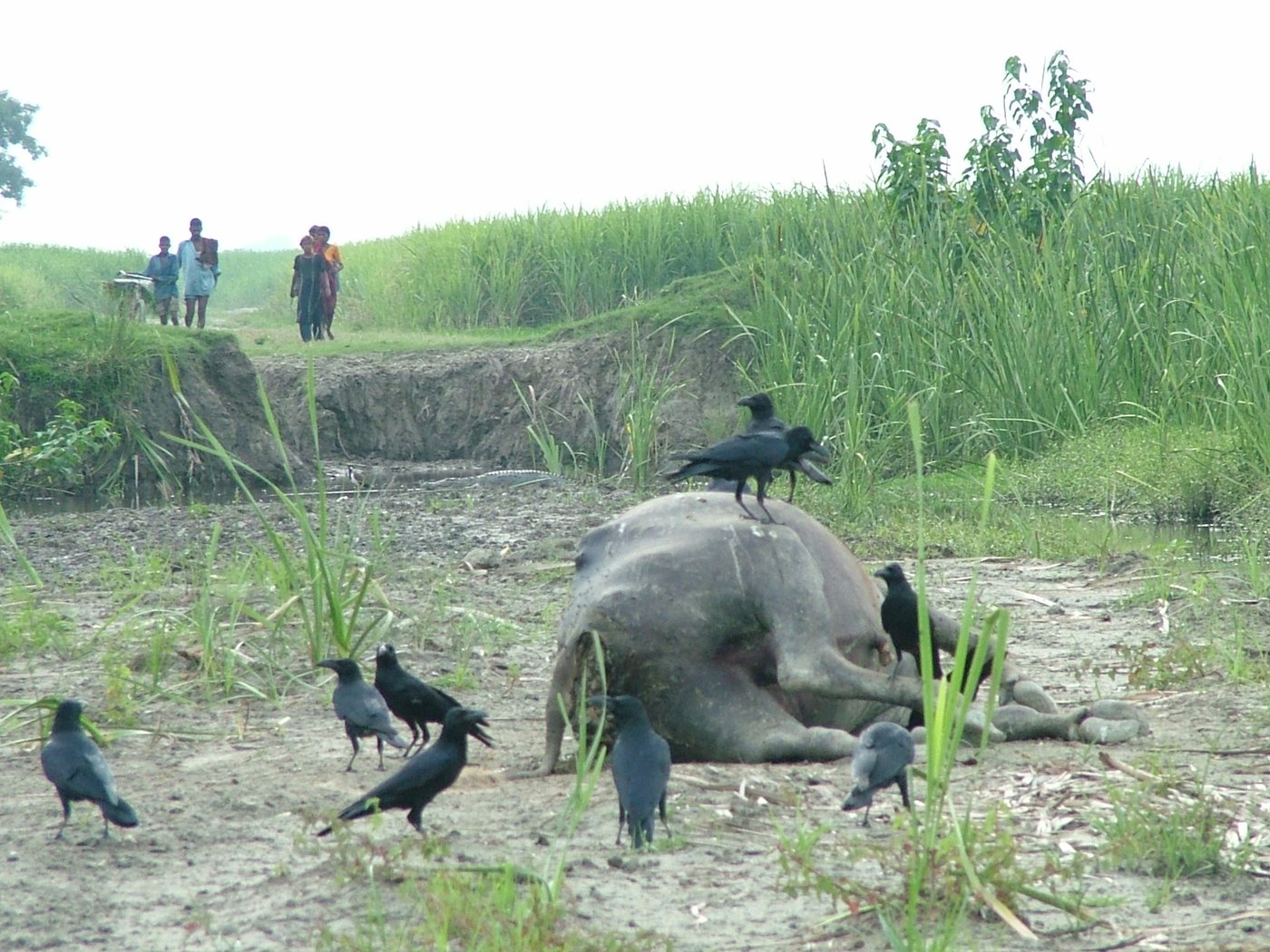
Jungle Crow is small bird of an overall size of approximately 0.46 meters – 0.59 meters. The Jungle Crow is variable in both its overall size and body proportions according to its geographical location. It is a glossy jet black crow with a heavy bill and deep and hoarse 'caw'. They have dark grey plumage from the back of the head, neck, shoulders and lower body with glossy black wings, tail, face and throat.
It is chiefly a bird of country side. They are widely distributed across Afghanistan, Iran, Philippines, India, Bangladesh, Pakistan, Ceylon, Burma, Nepal and Japan. In peninsular India; March to May in North India, Northeast Indian and Myanmar. The nests are slightly larger than in the care of house crow.
It is associated with vultures to feed on carrion. It is an omnivorous bird and it is highly destructive to eggs and chicks of other birds including domestic poultry.
Their breeding season is from December to April.
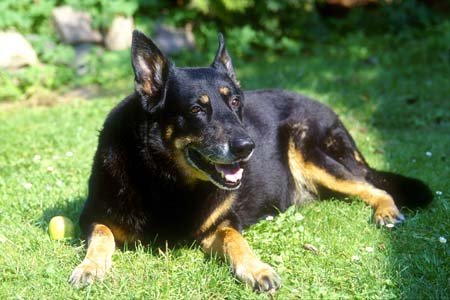
Feral dogs come in a variety of shapes and sizes. In appearance, most feral dogs are difficult to distinguish from domestic dogs. Like domestic dogs, feral dogs (sometimes referred to as wild or free-ranging dogs) manifest themselves in a variety of shapes, sizes, colors, and even breeds. Most feral dogs today are descendants of domestic dogs gone wild, and they often appear similar to dog breeds that are locally common.
Feral dogs are the most widespread of the wild canids. Feral dogs are often found in packs in forested areas or shrub lands in the vicinity of human habitation. Domestic dogs usually wagged their tails or exhibited a calm disposition when a human approached, whereas most feral dogs showed highly aggressive behavior, growling, barking, and attempting to bite. The only areas that do not appear to be suitable for feral dogs are places where food and escape cover are not available, or where large native carnivores, particularly wolves, are common and prey on dogs.
Many rely on carrion, particularly road-killed animals, crippled waterfowl, green vegetation, berries and other fruits, and refuse at garbage dumps.
Breeding occurs at any time throughout the year and females can give birth to two litters per year.
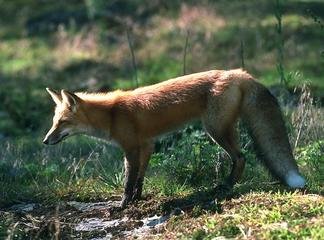
Common fox is approximately 0.82 meters – 1.09 meters in length. Colour ranges from pale yellow-red to deep red-brown on the upper parts and white, ashy on the underside. The lower part of the legs is usually black and the tail usually has a white or black tip. The eyes of mature animals are yellow. The nose is dark brown or black. The tooth row is more than half the length of the skull. The premolars are simple and pointed, with the exception of the upper fourth premolar. The molar structure emphasizes crushing. Red foxes are solitary animals and do not form packs like wolves. They also have excellent senses of vision, smell, and touch.
It utilizes a wide range of habitats including forest, tundra, prairie, and farmland. It prefers habitats with a diversity of vegetation types and is increasingly encountered in suburban areas. They are found throughout Canada, Alaska, almost all of the contiguous United States, all of Europe, North Africa, Britain and almost all of Asia, including Japan. They are the most widely distributed wild carnivores in the world.
Breeding season varies from region to region but usually begins in December or January in the south, January to February in the central regions, and February to April in the north.
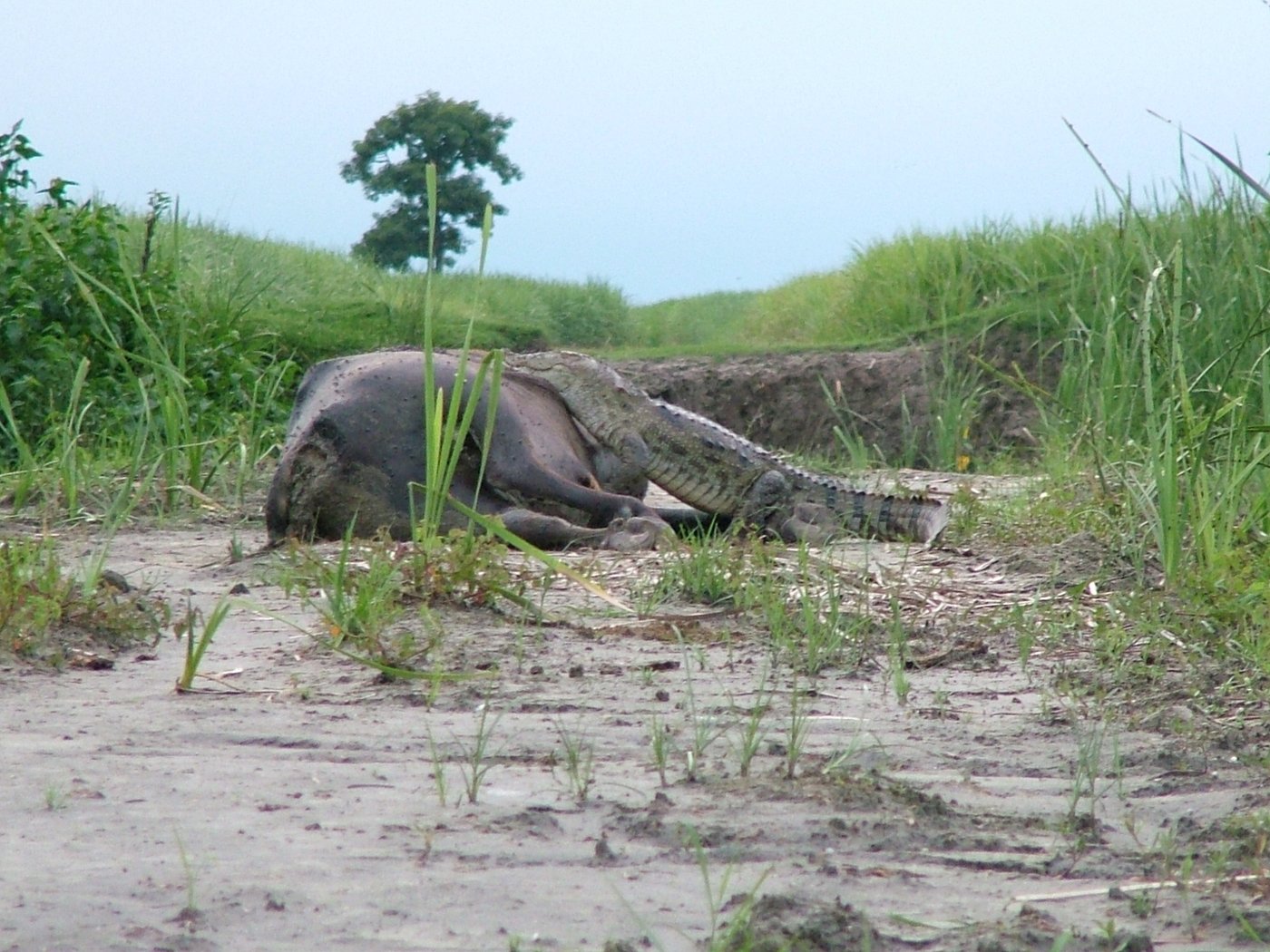
This is a medium to large species (4 to 5 m). Colour generally light tan in juveniles, with black cross-banding on body and tail. Adults are generally grey to brown, with little banding remaining. The snout is the broadest of any member of the Crocodylus genus,. Enlarged sautés present around the throat area may serve a similar protective function when moving through shallow swampy areas. Dentition includes four pre-maxillary, 14 maxillary and 15 mandibular teeth. Total no. of teeth = 66-68
It resides in freshwater rivers, lakes and marshes. Prefer slow-moving, shallower areas. They have also adapted to live in reservoirs, irrigation canals, and other man-made bodies of freshwater in Bangladesh, India, Islamic Republic of Iran, Nepal, Pakistan, Sri Lanka, possibly areas of Indo-China.
Juveniles take crustaceans, insects and small fish generally. Adults eat larger fish, amphibians, reptiles (mainly snakes and possibly turtles), birds and mammals (e.g monkeys). Large adults have been known to take deer and buffalo on occasions.
Their breeding season is during the dry season from December to February.
Download this chapter as the original Word document (3669 kb)