
Review · Vol. 2, No. 2
Popular Books Section


| OTHER REVIEWS IN THIS ISSUE [Technical Books Section] Pages: |1| 2| 3| 4| 5| 6| 7| 8| 9| 10| 11| 12| 13| 14| 15| 16| 17| 18| 19| 20| 21| 22| 23| [Popular Books Section] Pages: |1| 2| 3| 4| 5| 6| 7| 8| 9| [Animated Reviews] Pages: |1| [Software/Multimedia] Pages: |1|2| REVIEWS IN THE PREVIOUS ISSUE | NEXT ISSUE |
|
AN ERUDITE HISTORY OF IDENTIFICATION
|
Suspect Identities - A History of Fingerprinting and Criminal Identification by Simon A. Cole
Harvard University Press, Fitzroy House, 11 Chenies Street, London WC1E 7EY, England; 369 Pages: ISBN:0-674-00455-8 (alk. Paper), Hardback edition, 2001: Price $35.00
 |
|
 of this book holds a Ph.D. in Science and Technology Studies from Cornell University.
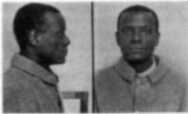
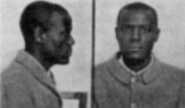
On May 1, 1903, one of the most astounding events happened in the history of identification. On that day, an African-American man named Will West entered the United States Penitentiary at Leavenworth. In those days, the obsession of giving exemplary sentences to recidivists (repeat offenders) was at a peak. The police had to tell the courts, if the criminals they were producing before them had committed a crime before or not. But it was not always easy. Police dealt with thousands of criminals. Sometimes a criminal was not caught again for a second time for several years, and memories naturally fade after such great intervals. To top it all, it was common for criminals to change their identities by growing beard, producing scars on their faces and so on.
 For these reasons, it was a tough job for police to identify criminals, who committed crimes a second time. Fingerprints were still at an infantile stage, and most people viewed them with suspicion. To ensure proper identification, Alphonse Bertillon of France had developed, what he called Portrait parlé (or speaking likeness). In this system, among other things, eleven measurements of the body were taken. It was thought - with some good reason - that it was impossible for two different people to have all eleven measurements exactly the same. These measurements came in handy for the police to identify criminals, if they came to them a second time.
 |
 |
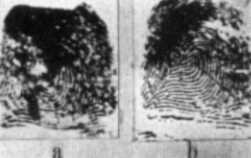 |
When the police took these measurements for Will West, they matched exactly those taken previously from a different prisoner William West. Police seemed to know the reason for this: Will West was speaking a lie. He was the earlier William West, who had changed names in order to save himself for the harsh punishments meted out to recidivists. No amount of pleadings would have had any effect on the police, had they not discovered that William West was already in prison at that time! And when the two were brought together, everyone was amazed. They looked exactly alike. Here was the strangest case in the history of identification - two people apparently unrelated (they denied being related, although it has been established now that they were identical twins), having exactly the same appearance and the same Bertillon measurements. How could one be differentiated from the other? Of course dactylography!
Readers wanting to read the details of this astounding case may want to refer to this extremely interesting book. This book is full of interesting cases relating to identification. You can read the famous Jennings case (People v. Jennings), a Chicago murder trial or the famous Crispi case (People v. Crispi), a New York City Burglary case, or a host of other similar cases. In each of these cases, a crime was committed, and the criminal was apprehended by means of a technique new in that era. Both Jennings and Crispi were convicted by means of fingerprinting which was so new in that era, that it was accepted rather hesitatingly by several people who mattered. Yet these cases stand out among the rest as the judges in these cases were bold enough to accept fingerprint evidence and award sentences. In Jennings case, the judge awarded death sentence - on fingerprint evidence.
The book traces the history of identification from the old and outdated Bertillon system to the modern DNA fingerprinting. The book has a racy style. I found it difficult to keep it down till I finished it. It is illustrated with a number of black and white photographs, many of which can now be considered classics.
I would recommend this book fully if you are interested in forensics and especially in the history of identification. It is written in simple non-technical language, so every intelligent person would be able to enjoy this book.
Order this Book by clicking here.
Request a PDF file of this review by clicking here. (If your screen resolution can not be increased, or if printing this page is giving you problems like overlapping of graphics and/or tables etc, you can take a proper printout from a pdf file. You will need an Acrobat Reader though.)